Submitted by admin on February 3rd, 2024
Kolkata, February 2, 2024: In India, private and public sector banks provide business loans to eligible borrowers. These institutions charge interest rate on the loaned amount as soon as EMI (Equated Monthly Installments) starts. Businesses with a good credit score and an impressive balance sheet have a better chance of qualifying for business loans. However, they must produce required documents and undergo verification process. Only after the authority is satisfied, loan is granted to the applicant.
It is important to keep in mind that business loan interest rate is not uniform across all the Indian banks. The rate varies from one bank to another and also depends on the type of loan one applies for.
There are different types of business loans. In India, the most popular types of business loans are:
Unsecured Business Term Loan: This type of loan involves a large sum of money and is repaid as EMI with additional interest for a particular period of time.
Business Overdrafts: Banks have the right to approve overdrive facility for a business and also set a maximum loan limit for it. The facility will allow the business enterprise to withdraw any time. The big difference is absence of fix patterns for repayment, given that interest is repaid periodically.
Cash Credit:It is kind of short-term loan. The loan tenure is usually up to 12 months. Interest is charged on the withdrawn amount and not the primary amount. This is why, cash credit is popular among businesses.
Business Loan Against Property: It is a kind of secured loan that requires businesses to use their business property or assets as collateral to take out loan.
MSME Gold Loan: Similar to loans approved against property, businesses can take out gold loans (typically up to 75% LTV) against the current value of gold.
How to Qualify for Business Loan
Two types of documents are required to apply for business loan – Personal Documents and Business Documents.
Personal Documents: Aadhaar card, Voter ID card, PAN card, Driving License, Passport (For proof of your identity and address)
Bank statement of minimum six months, latest Income Tax Returns, computation of balance sheet mentioning account on profit and loss for minimum two years (For proof of your financial statement)
Business Documents: GST/ITR return, sales tax certificate, trade license (For proof of business continuation)
Certified copy of partnership deed or certificate of sole proprietorship (other documents as per your business type)
A number of factors determine the interest rate on your business loans. These factors include your personal credit score, commercial credit score, type of business loan (secured or unsecured), loan amount and repayment time, fixed or floating interest rate, current health of industry and market speculations.
Int Rates : 10.5% - 22%
Loan Amount: ₹ 1,00,000.00
Maximum Tenure - 7 Years
Lowest EMI : ₹ 1,686
Interest Rate 13.99% - 24.99%
Loan Amount: ₹ 1,00,000.00
Maximum Tenure – 5 Years
Lowest EMI : ₹ 2,326
Interest Rate 9% - 13%
Loan Amount: ₹ 1,00,000.00
Maximum Tenure – 20 Years
Lowest EMI : ₹ 1,014
Interest Rate 8.40% - 12%
Loan Amount : ₹ 1,00,000.00
Maximum Tenure – 35 Years
Lowest EMI – ₹ 739
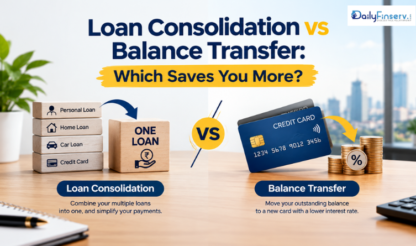
It can be difficult to keep track of repayments if each lender has a different repayment amount or repayment date. There are two possibilities that may assist you: loan consolidation and also balance transfer. But which one can save you more mon....
Read More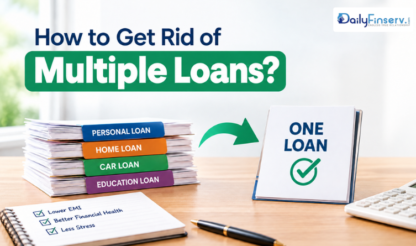
It may be hard to keep track of several loans. When you have multiple EMIs, different interest rates, repayment dates and loan terms, it can become challenging to keep track of everything.When you're asking yourself how to pay off all your l....
Read More
Can you take out a personal loan if you already have a loan? Let us assume you qualify with the lender. The presence of an existing loan doesn't mean that your loan application will be denied. But before approving another loan, lenders will look....
Read More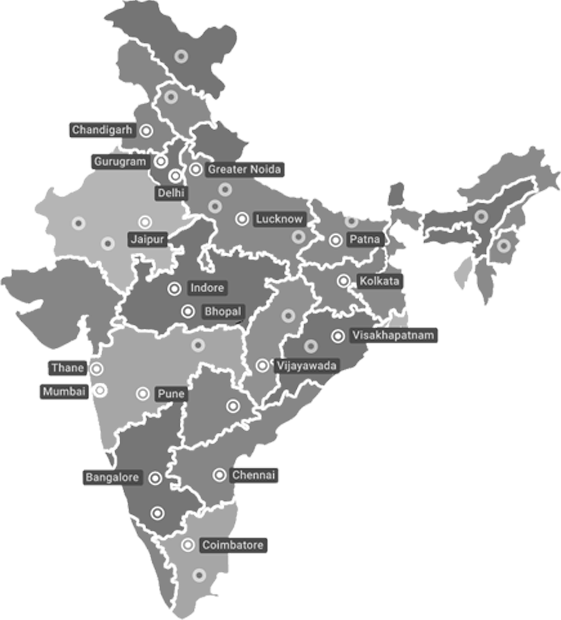
Pioneering ease of access to Basic Banking & Financial Services in Rural India
