Submitted by admin on June 20th, 2026
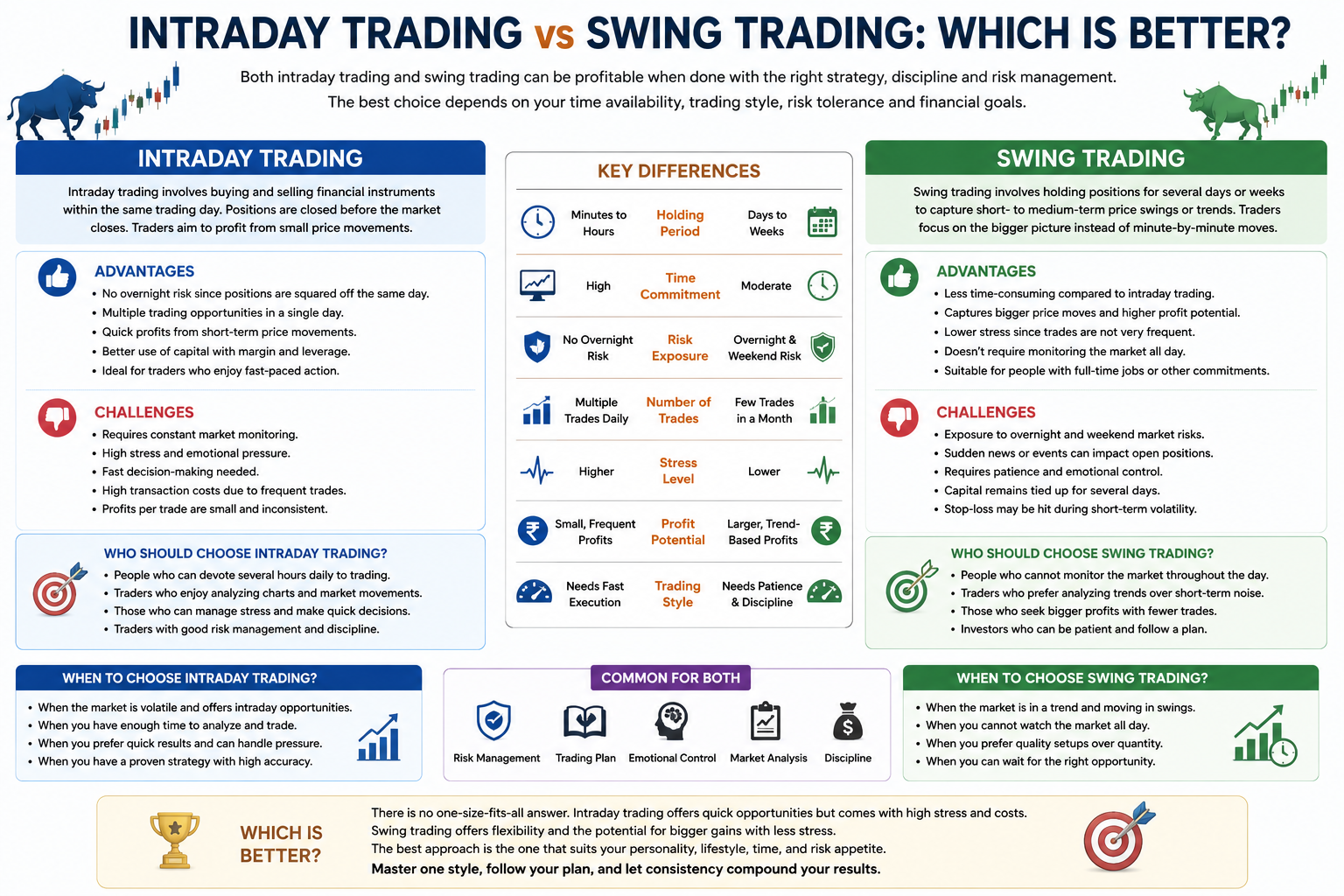
There are several methods of trading stocks in the market, among which two popular ones are intraday trading and swing trading. While both methods seek to profit from price changes, there are notable differences in their time commitment, risk, and strategies. These differences can inform traders of what the right method is to help achieve their goals and fits their lifestyle.
The intraday trading refers to the buying and selling of stocks or other securities within the trading day. Usually, positions will be closed before the markets close so that no trades will be made over the night.
Intraday traders are looking to make money off of the short-term price movements. They tend to use technical analysis, chart patterns, market news, and trading indicators to find trading opportunities.
Swing trading is the practice of trading stocks that are held for a few days or weeks. Swing traders do not pay attention to the minute-to-minute price movements; they concentrate on short to medium term movements in the market.
The swing trader approach involves analyzing both technical and fundamental indicators to chart stocks with promising momentum or trend opportunities.
Less time consuming than intraday trading.
Risk of overnight and weekend market exposures.
This depends on your personality, experience and availability.
But if you think you have the time to analyze the markets and play several hours a day, intraday trading might work for you. It demands speedy decision making, discipline and effective risk management.
Some people think that swing trading is easier to learn than day trading from the fact that you don’t have to watch your trading accounts constantly. Traders can research the market after-hours, make trades and allow trends to form.
Intraday trading and swing trading can both be profitable if approached with a well-thought-out strategy and prudent risk management practices. Intraday trading offers numerous opportunities but requires a lot of attention and time. Swing trading is more flexible and can help trade bigger price swings over the course of a day, week or even a month.
Int Rates : 10.5% - 22%
Loan Amount: ₹ 1,00,000.00
Maximum Tenure - 7 Years
Lowest EMI : ₹ 1,686
Interest Rate 13.99% - 24.99%
Loan Amount: ₹ 1,00,000.00
Maximum Tenure – 5 Years
Lowest EMI : ₹ 2,326
Interest Rate 9% - 13%
Loan Amount: ₹ 1,00,000.00
Maximum Tenure – 20 Years
Lowest EMI : ₹ 1,014
Interest Rate 8.40% - 12%
Loan Amount : ₹ 1,00,000.00
Maximum Tenure – 35 Years
Lowest EMI – ₹ 739
