Submitted by admin on October 14th, 2026
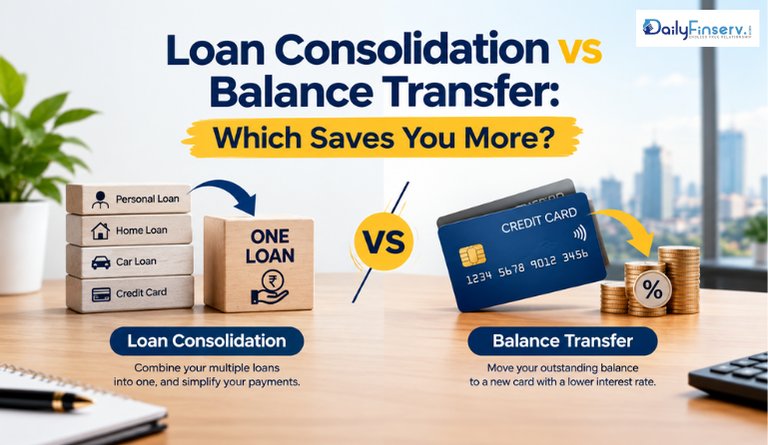
It can be difficult to keep track of repayments if each lender has a different repayment amount or repayment date. There are two possibilities that may assist you: loan consolidation and also balance transfer. But which one can save you more money?
Before taking any financial decision, it is important to understand loan consolidation vs balance transfer. Loan consolidation is when a number of loans are consolidated into one loan, while a balance transfer will transfer an outstanding loan to another lender, which may be for the purpose of obtaining a better interest rate. This will vary based on your existing debt, interest rates, loan term, and other fees.
Debt consolidation loan India enables the borrower to roll over all the eligible outstanding debts into a single loan in India. The debts can consist of personal loans, credit card bills and any other loan that is allowed under the policies of the lender.
You only pay one loan by making one monthly payment rather than multiple EMIs or credit card payments.
Key benefits include:
But consolidation does not necessarily mean that you are automatically going to save money on your debt. The overall cost of repaying your loan may go up if your new loan has a higher interest rate or has a longer term to pay back.
A balance transfer personal loan is a type of personal loan where the existing loan gets moved to another lender who provides better terms. The advantage of a balance transfer varies from lender to lender and can include a reduced interest rate, a longer repayment term or more affordable monthly repayments.
If, for instance, you have a personal loan with a high interest rate, switching the loan to a loan with a lower interest rate would save you some interest payable on the remaining loan amount over the remaining loan period.
Lower EMI doesn’t automatically imply savings. The longer that you have the loan, the less impact it will have on your monthly payments, but the more interest you will pay over the course of the loan. You can also read: Emergency Personal Loans During Crisis: When to Borrow and When to Avoid.
The loan consolidation meaning is straightforward: It is the process of merging several loans into a single one in order to simplify the repayment.
If you have two personal loans and credit card debt, if you are eligible for a consolidation loan, you could use the money to pay off these debts and then pay a single monthly payment on the consolidation loan.
On the other hand, a balance transfer typically revolves around transferring an existing loan or balance from one lender to another. There are some balance transfer products that may only apply to credit card balances and the eligibility terms apply and will differ.
Balance transfer vs loan consolidation will depend on the kind of debt you have and the terms that are available to you.
The benefits of loan consolidation are greater if:
A balance transfer is more beneficial when:
Actual figures may differ depending on the lender, repayment terms and conditions. If you have more than one debt and they are all available to consolidate, compare the consolidation choice in the same way.
When you are making multiple EMIs each month, it could be beneficial to your finances to consolidate the eligible loans.
Before applying, work out the total amount owing and compare this with the amount you would pay back for the new loan.
In addition, review the fact that you may have prepayment or foreclosure fees on any loans you have already. These costs can offset the savings that are anticipated.
The most important thing to keep in mind is that you don’t start any new credit card debt following consolidation. Otherwise, you might end up paying the consolidate multiple EMIs into one loan and still end up with another outstanding balance.
If you carry a balance on your credit card, the interest will quickly add up and make your debt more costly. A credit card debt consolidation loan might be able to assist those who qualify in changing revolving credit card debt to a repayment plan.
The rate of interest of a personal loan might be less expensive compared to the rate of a credit card, but it depends on the lender’s rate and also your credit rating profile.
Potential advantages include:
It is also advisable to keep paying off your credit card debt until the balance is paid down. When the balance is paid back, it is important to spend wisely on the card in the future, making sure to not get into the same cycle again. You can also check out: Personal Loan Eligibility and Documents – Everything Borrowers Must Know
If you need to take out a personal loan to consolidate your debt, you’ll want to compare the options available to you.
A personal loan for debt consolidation could be helpful if you can get better terms on the loan than what you are paying on your debts. But one should not opt for a loan just because it has a lower EMI because one has to consider the full cost of the repayment. You can check out HDFC vs SBI vs ICICI Personal Loan Comparison: Which Bank is the best?
Review these factors before making a decision:
Loan consolidation involves the amalgamation of several permissible debts into a single loan that has a single EMI. Balance transfer involves shifting a running loan from one lender to another and usually to a lender with better interest rates or better repayment terms.
On the other hand, multiple loans and a desire to have a single EMI may make loan consolidation a better option. If you are looking to lower interest rates on an existing loan, a balance transfer could be a better option. Make comparisons before you make a decision: total interest, fees and repayment period.
Yes, there are credit lenders that do allow the use of a loan to pay off several other personal loans and credit card bills. The approval is based on the lender’s policies, income, credit profile, balances outstanding, and repayment ability.
Yes, it does have the potential to lower EMI if a credit card transfer loan is offered at a lower interest rate or a longer repayment period. However, the longer it takes to pay off the greater the total interest will be, so calculate the total repayment amount.
If you believe that a debt consolidation loan has a lower effective rate of interest and a reasonable repayment plan, then it could be a solution to your credit card debt problem. Verify all the fees and do not add new credit card debt upon consolidation.
A fresh loan application can lead to a new credit enquiry and a new credit account, which can impact your CIBIL score. As time passes, consistent payments and reduced usage can improve your credit profile, though the impact will depend on your entire credit history.
Lenders typically consider your credit score, income, and job or business history, debt obligations, and payment history. Lender and product specific eligibility criteria exist.
Potential fees may include processing fees, foreclosure/payment in advance, transfer fees and taxes. Before taking an offer, please read and understand the Key Facts Statement and loan agreement.
DailyFinserv can offer a solution if you have an existing loan or balance and can get better terms, which will yield real savings; select a balance transfer. If you have multiple debts that qualify for consolidation, it will be advisable to consider consolidating them into a single payment.
Int Rates : 10.5% - 22%
Loan Amount: ₹ 1,00,000.00
Maximum Tenure - 7 Years
Lowest EMI : ₹ 1,686
Interest Rate 13.99% - 24.99%
Loan Amount: ₹ 1,00,000.00
Maximum Tenure – 5 Years
Lowest EMI : ₹ 2,326
Interest Rate 9% - 13%
Loan Amount: ₹ 1,00,000.00
Maximum Tenure – 20 Years
Lowest EMI : ₹ 1,014
Interest Rate 8.40% - 12%
Loan Amount : ₹ 1,00,000.00
Maximum Tenure – 35 Years
Lowest EMI – ₹ 739
