Submitted by admin on October 15th, 2026
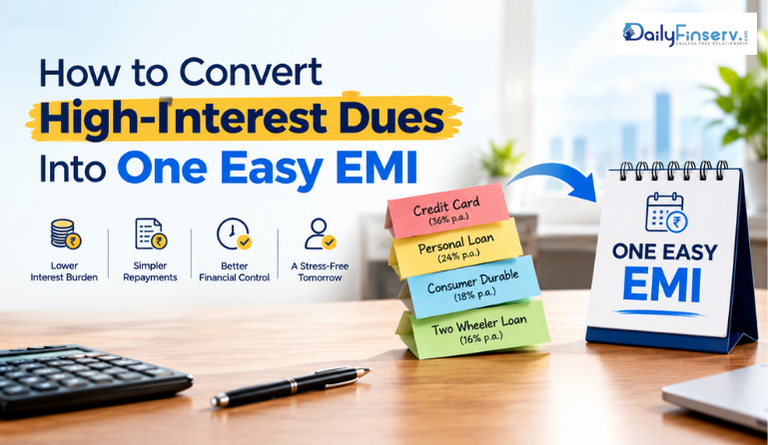
When there are several credit card bills with various due dates, interest rates and minimum payments, it can be stressful to keep track of all of them. You might be paying only the minimum monthly payment, and your still outstanding debt may be harder to pay off and interest charges will continue to add up.
One of the ways to make it easier to repay debts is to opt for credit card debt consolidation, where eligible debts are consolidated into one loan and there is one EMI to repay. This can make it easier for you to pay off the loan and could lower your interest rate, depending on your qualifications and the terms of the loan.
A credit card debt consolidation loan may be able to help those who qualify consolidate expensive revolving credit card debt and get a fixed repayment plan.
Carrying over a balance from month to month can cost you a lot on your credit card. An appropriate personal loan can also have a lower rate of interest and a clear repayment plan, which will be easier to plan monthly payments.
These are things to take into account before applying:
A consolidation loan is best used when paying it back becomes easier than the various other loans that are to be consolidated, but at the same time is not unnecessarily costing one more penny.
If the lender allows this use and approves your request, consolidate credit card debt into personal loan can be used to pay off any outstanding credit card debt.
The first step is to work out how much you owe on all your cards. Then, do a comparison of all the offers of personal loans that are eligible to apply and their interest rate, fees, tenure and EMI.
After you are approved, pay off the desired card debts using the loan funds. The confirm that the payments have been credited and check your next statements for any remaining interest or charges.
The primary benefit is that you get to pay fewer payments and are scheduled to pay one EMI. This can help to streamline budgeting and minimise the likelihood of missing numerous payment deadlines.
If you can’t pay your full bill on your credit card, you can switch eligible purchases or outstanding dues into EMIs with your card issuer.
This option differs from taking a personal loan. Convert credit card dues into EMI conversion is a process in which the issuer of credit cards converts the dues with respect to a particular credit card into a series of instalments as per their terms. A personal loan is a loan you take out for a certain amount of money and pay off the balance on the card.
Before selecting any of the above, verify:
Paying dues in EMIs can give you the flexibility that you may need to pay off the debt in the short term, but it may not be necessarily cheaper. Always compare the overall repayment before making an offer.
To deal with high interest credit card loan consolidation India, borrowers can consider taking out personal loans, avail EMI facilities offered by the issuer, or any other appropriate loan.
These options may be available and subject to the terms for the lender’s policies, borrower’s income, existing obligations, credit history and repayment capacity.
To make it easier to compare, just make a list of all your credit cards, including their minimum payments, interest rates, outstanding balances, and payment dates. Next calculate the overall expense of an ongoing payment system versus an offered consolidation loan.
What is not enough is having a lower EMI. The new loan amount can help lengthen the term of repayment, which will result in paying more interest. You can also read: Personal Loan EMI Calculator: Estimating Costs Before You Buy Appliances
Select something that is affordable, has a realistic debt free strategy and it’s a good borrower rate.
Someone with a steady income and is eligible to have better terms on a personal loan than what they are currently paying on their credit card may be able to use a personal loan for credit card debt to pay off their credit card debt.
The following are some of the benefits that might be achieved:
But approval is not guaranteed. There are a number of criteria that lenders will take into account, including income stability, current EMIs, credit history, outstanding obligations, and the lender’s own criteria.
If you are already struggling with your existing debts, then do not borrow further money unless you are sure you can afford the extra repayment plan.
The first step to reduce credit card interest charges is to figure out how much you are paying for each of your balances.
If you transfer balances that you did not pay off, the interest and fees charged may make your payments more difficult. Making the minimum payment keeps the account current as per the issuer’s terms, but won’t pay off the account rapidly.
Try the following strategies:
Avoid needless spending: Don’t add new purchases to cards with unpaid balances.
Pay off high interest debt: If you have high-interest debt, make a decision to make an extra payment on that debt first.
Make a comparison: See if a personal loan or EMI facility makes the overall cost lower.
Make it a habit to pay bills on time: Use reminders or automatic payments to help you stay on top of the bill.
Review your statements: Regularly check interest, fees and outstanding amounts.
Create a repayment plan: Set up a monthly payment that will help you pay off the debt without sacrificing other bills.
A consolidation loan will only save money if the loan terms are actually better, and you do not get into more debt.
Having several credit card bills to pay can be challenging if you have different balances, different due dates and different interest charges per card.
Before proceeding, calculate:
While consolidation can lower the monthly payment load, the longer the loan is extended, the more interest will be paid in total. The goal is to make repayments affordable while getting the debt repaid as efficiently as possible.
Credit card debt consolidation involves merging your credit card debts into a single payment plan. A personal loan is a typical choice. You make a single EMI repayment for a number of card balances. The savings will vary depending on interest rate, fees and length of time.
Determine what is owed on all your cards. Check out the offers of the personal loans, asking for the interest rate, processing fee, EMI and repayment period. When a lender accepts your loan request, put the money into the balances of the desired cards. Check out the payments and then pay back the new loan on schedule.
If the overall cost of borrowing a personal loan is lower than what you are getting for your current credit card debt and the EMI is within your budget then you can use it. But the fees, length of the term or extra borrowing may diminish or negate benefits. Compare the complete repayment cost before making a decision.
It can lower your monthly repayments if the loan you’re applying for has an acceptable term or a longer term. But a lower EMI doesn’t always mean lower total interest amounts. Make comparisons between a monthly payment and the amount payable over the entire repayment period.
Your CIBIL score can vary based on the way that you apply for the new loan and the manner in which you manage it. A formal loan application can result in a credit enquiry and new loans alter your credit profile.
Lender requirements apply. Some of the factors taken into account are age, income, job or business stability, current EMI’s, credit history, and repayment ability. Lenders can also have minimum income and loan amount requirements. Review the criteria of the selected lender before making an application.
Some lenders might ask for PAN, Aadhaar or other acceptable identification and address proof along with bank statements, salary slips or income tax returns, and information regarding any existing credit card balances. There may be more documents to be requested for verification. Deliver papers via the lender’s official procedures.
While repayment options might still be available, a poor CIBIL score may decrease the likelihood of a personal loan approval or result in more restrictive terms. Think about working with your current card company to find a way to pay back your debt, rather than applying for another loan and paying your bill on time if you can.
The biggest dangers are processing charges, additional interest to be paid because the loan needs to be paid out for a longer period, rejection of the loan, and the formation of new credit card balances after consolidation. Not only that, but sometimes a lower EMI can give a false sense of affordability. Thoroughly read the agreement, add up how much you will repay, and only borrow what you can afford to pay back.
DailyFinserv provides information on financial products, such as personal loans. Go to its site to consider the choices and if there is a loan that you may be able to use to pay off your credit card debt. Final eligibility, the interest rate, and the terms and conditions of the loans are decided by the respective lender.
Int Rates : 10.5% - 22%
Loan Amount: ₹ 1,00,000.00
Maximum Tenure - 7 Years
Lowest EMI : ₹ 1,686
Interest Rate 13.99% - 24.99%
Loan Amount: ₹ 1,00,000.00
Maximum Tenure – 5 Years
Lowest EMI : ₹ 2,326
Interest Rate 9% - 13%
Loan Amount: ₹ 1,00,000.00
Maximum Tenure – 20 Years
Lowest EMI : ₹ 1,014
Interest Rate 8.40% - 12%
Loan Amount : ₹ 1,00,000.00
Maximum Tenure – 35 Years
Lowest EMI – ₹ 739
