Submitted by admin on February 6th, 2026
The personal loan market in India is witnessing significant growth in 2026, driven by rising consumer demand, digital lending innovations, and stable economic conditions. As banks and non-banking financial companies (NBFCs) compete aggressively to attract borrowers, personal loans have become one of the fastest-growing segments in the retail credit market.
In February 2026, lenders continue to offer competitive interest rates, faster approvals, and flexible repayment options. However, experts caution that borrowers must carefully evaluate costs and repayment capacity amid rising credit penetration and evolving lending practices.
Personal loans have become a preferred financial tool for millions of Indians. Unlike secured loans, personal loans do not require collateral, making them accessible to a wide range of borrowers. In 2026, demand is being driven by multiple factors, including lifestyle spending, medical emergencies, weddings, travel, education, and debt consolidation.
Urban and semi-urban consumers are increasingly relying on personal loans to manage short-term financial needs. The rise of digital banking and fintech platforms has also simplified the borrowing process, enabling customers to apply for loans online and receive approvals within hours.
Salaried professionals remain the largest segment of personal loan borrowers, followed by self-employed individuals and small business owners. Younger consumers, particularly those in their late twenties and thirties, are showing a strong preference for unsecured credit, reflecting changing financial behavior and consumption patterns.
In 2026, personal loan interest rates in India remain relatively stable and competitive. Public sector banks generally offer lower interest rates, making them attractive to borrowers with strong credit profiles. Private banks and NBFCs, on the other hand, focus on speed, convenience, and flexible eligibility criteria.
The intense competition among lenders has resulted in personalized pricing models, where interest rates are determined based on factors such as credit score, income level, employment stability, and repayment history. Borrowers with high credit scores benefit from lower interest rates, while those with moderate or low scores often pay higher rates.
Processing fees, prepayment charges, and other costs continue to vary significantly across lenders. As a result, financial advisors recommend that borrowers compare the total cost of borrowing rather than focusing only on interest rates.
One of the most notable developments in the personal loan market in 2026 is the rapid expansion of digital lending. Banks and NBFCs are investing heavily in technology to streamline loan approvals and enhance customer experience.
Artificial intelligence and data analytics are being used to assess creditworthiness more accurately and reduce processing time. Many lenders now offer instant personal loans with minimal documentation, leveraging digital KYC and automated credit assessment tools.
Fintech companies are playing a crucial role in transforming the lending ecosystem. By partnering with banks and NBFCs, fintech platforms are enabling faster loan disbursement and reaching underserved segments of the population.
However, the growth of digital lending has also raised concerns about data privacy, cybersecurity, and responsible lending practices. Regulators are increasingly focusing on strengthening oversight to ensure transparency and consumer protection.
In 2026, credit scores have become a critical factor in personal loan approvals. Borrowers with strong credit histories enjoy better terms, while those with poor scores face higher interest rates or rejection.
Financial awareness among consumers is gradually improving, with more borrowers understanding the importance of maintaining a healthy credit profile. Many individuals are now actively monitoring their credit scores and managing their debt responsibly.
At the same time, a significant portion of borrowers still lack adequate financial literacy. This has led to cases of over-borrowing and rising debt burdens among certain segments of the population. Experts emphasize the need for better financial education to promote sustainable borrowing habits.
Despite its growth, the personal loan market faces several challenges in 2026. Rising household debt is one of the key concerns for policymakers and financial institutions. As more consumers rely on unsecured credit, the risk of loan defaults increases.
Economic uncertainties, inflationary pressures, and changes in employment patterns can also impact borrowers’ ability to repay loans. Lenders are therefore strengthening their risk assessment frameworks and focusing on high-quality borrowers.
Another challenge is the increasing number of fraudulent loan applications and digital scams. With the expansion of online lending, fraudsters are exploiting vulnerabilities in digital systems. Banks and NBFCs are responding by enhancing security measures and educating customers about safe borrowing practices.
The regulatory environment in 2026 is evolving to address the complexities of the digital lending ecosystem. Authorities are focusing on improving transparency, strengthening consumer protection, and promoting responsible lending.
Regulators are encouraging lenders to adopt fair practices, disclose all charges clearly, and ensure that borrowers understand the terms and conditions of loans. Efforts are also being made to curb predatory lending and prevent excessive debt accumulation among vulnerable groups.
The policy outlook for the personal loan sector remains stable, with no major disruptions expected in the near term. However, lenders are likely to continue refining their strategies to balance growth with risk management.
For borrowers, 2026 presents several opportunities in the personal loan market. The availability of multiple lenders and digital platforms allows customers to compare offers easily and choose the most suitable option.
Flexible repayment options, customized loan products, and competitive interest rates provide greater financial freedom. Borrowers with strong credit profiles can negotiate better terms and reduce their overall borrowing costs.
Debt consolidation is emerging as a popular use case for personal loans. Many borrowers are using personal loans to repay high-interest credit card dues, thereby simplifying their finances and reducing interest expenses.
Looking ahead, the personal loan market in India is expected to continue expanding in the coming years. Technological advancements, rising consumer aspirations, and increasing financial inclusion will drive further growth.
Lenders are likely to introduce more innovative products tailored to specific customer segments. Personalized lending, AI-driven credit assessment, and seamless digital experiences will shape the future of unsecured lending.
However, sustainable growth will depend on responsible borrowing, effective risk management, and strong regulatory oversight. Both lenders and borrowers will need to adopt prudent financial practices to ensure long-term stability in the personal loan ecosystem.
In 2026, personal loans remain a vital component of India’s retail credit market. The sector is characterized by strong demand, technological innovation, and intense competition among lenders. While borrowers benefit from greater choice and convenience, rising debt levels and digital risks highlight the importance of informed decision-making.
As the personal loan market continues to evolve, a balanced approach combining growth, transparency, and financial discipline will be essential. For borrowers, understanding the true cost of loans and maintaining a healthy credit profile will remain the key to making smart financial decisions in the dynamic lending landscape of 2026.
Int Rates : 10.5% - 22%
Loan Amount: ₹ 1,00,000.00
Maximum Tenure - 7 Years
Lowest EMI : ₹ 1,686
Interest Rate 13.99% - 24.99%
Loan Amount: ₹ 1,00,000.00
Maximum Tenure – 5 Years
Lowest EMI : ₹ 2,326
Interest Rate 9% - 13%
Loan Amount: ₹ 1,00,000.00
Maximum Tenure – 20 Years
Lowest EMI : ₹ 1,014
Interest Rate 8.40% - 12%
Loan Amount : ₹ 1,00,000.00
Maximum Tenure – 35 Years
Lowest EMI – ₹ 739

Financial crises may occur at any time. Savings are often compromised by medical bills, emergency home repairs, travel requirements, or unforeseen costs. In this case, a quick ₹ 50,000 or ₹1 lakh personal loan can come to the rescue. These l....
Read More
There are some costs in life that are not planned. It may be a medical emergency, an emergency involving traveling, repairing your house or paying bills arrears. When this happens, instant personal loan application online can be used to get easy....
Read MoreWedding is one of the most privileged events in life. It is a festival of love, family and new dawns. But costs of weddings are very expensive. Venue booking, catering, decorations, jewelry, clothes, photography and guest arrangements may strain....
Read More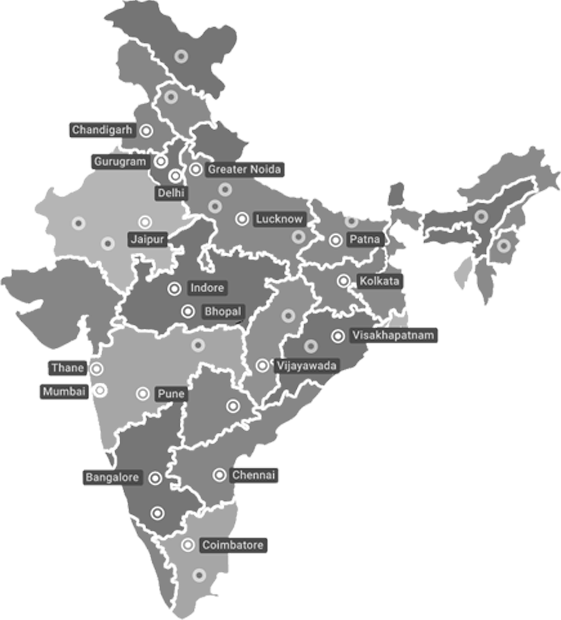
Pioneering ease of access to Basic Banking & Financial Services in Rural India
